Friday, February 25, 2011

Heldon , Interface, 1978


More Images from Vinyl Releases of Heldon 6 / Interface


Click small images above to see larger versions.


Studio Album, released in 1978

Tracklisting:
1. Les soucoupes volantes vertes
2. Jet Girl: in New York or Paris, equivalent / in south Bronx
3. Bal-a-fou 
4. Le fils des soucoupes volantes vertes
5. Interface

Total Time: 40:44
Releases information
LP Cobra-COB 37013 / CD Spalax-14290-Fra / CD Cuneiform Rune 43-Wor
Thanks to ProgLucky for the addition
Buy HELDON Music
from Progarchives.com partners

Heldon, Stand By, 1979

 If you enjoyed my previous Heldon post, here's another great Progressive electronic one. This is the studio album, released in 1979.

Tracklisting:
1. Bolero
1 Apprehension
2 Bolero proprement dit
3 Recognition
4 Repetition
5 Rote Armee Fraktion
6 Production
7 Distribution
8 Deterrioration
2. Une Drole de Journee
3. Stand By

Total Time: 39:47

Listen:
http://www.megaupload.com/?d=HIC4IMRN


Releases information
LP Egg 900578 (1979)
CD Spalax-14233-Fra
CD Cuneiform Rune 53 (1995)
Thanks to ProgLucky for the addition and to Joolz for the last updates

Buy HELDON Music
from Progarchives.com partners


Heldon IV, Agneta Nilsson, 1976


Heldon is a French electronic rock band created in 1974. The name of the band was taken from the 1972 novel The Iron Dream by Norman Spinrad. This is the studio album, released in 1976.

Like its predecessor Schizo, it is above all the group of guitarist Richard Pinhas who released a large number of albums under his own name.
He has worked with numerous collaborators, including musicians of the band Magma as well as philosophers such as Gilles Deleuze (of whom he was a student) and writers such as Norman Spinrad and Maurice Dantec (the Schizotrope project).
Influenced by the work of Robert Fripp and Brian Eno, the music of Richard Pinhas and Heldon is sui generis and innovative and has in its turn greatly influenced the field of electronic rock.
The first releases under the moniker Schizo and later Heldon were entirely self produced and self distributed.
 Source: Wikipedia


 Line-up / Musicians
- Richard Pinhas / Mellotron, 1954 Gibson Les Paul guitar, synthesizers (1-3,5)
- Michel Ettori / guitars, composition (4)
- Alain Bellaiche / bass (5)
- Gérard Prevost / bass (4)
- Patrick Gauthier / Minimoog (5)
- Philibert Rossi / Mellotron (1)
- Coco Roussel / drums, percussion (2,5)


Releases information
LP Disjuncta-Urus-00011 / LP Aural Explorer-AE 5001 / CD Spalax-14227-Fra / CD Cuneiform-Rune 60-Wor

Thanks to ProgLucky for the addition and to Joren for the last updates
 
 
Tracklisting:
1. Perspective I (où commence le nihilisme actif) (10:26)
2. Perspective II (3:13)
3. Perspective III (Baader Meinhof Blues) (10:48)
4. Bassong (2:59)
5. Perspective IV: (21:45)
i Perspective IV (7:07)
ii Virgin Sweedish Blues (7:28)
iii Psylocybine (8:34)

Total Time: 50:24

Listen:


Part 1 | Part 2


Password: www.AvaxHome.ru


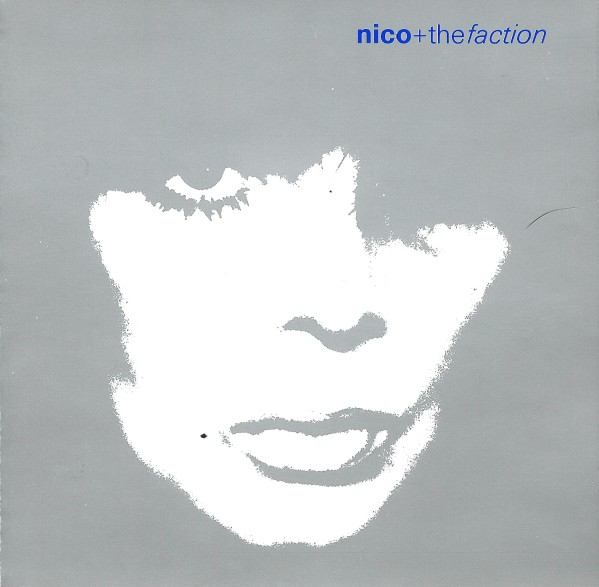
Nico, Camera Obscura, 1985


Camera Obscura (Darkened Chamber) is the name of an experimental avant-garde music album recorded and released by Nico in 1985. It was produced by John Cale, marking their first studio collaboration since The End in 1974. It was Nico's final studio album before her death three years later.

Nico's vocal style is somewhat different from her prior records, with some songs bearing similarities to Dead Can Dance's Lisa Gerrard. The jazz standard "My Funny Valentine", by contrast, has a more standard legato vocal style, despite her very deep contralto. Many of the tracks offer a refined version of the new wave gothic rock of her previous album, Drama in Exile. The album is dedicated to her then manager, Alan Wise.
Sonically, the album follows on from Drama of Exile in that Nico's core songs are given full band arrangements. Whereas Drama of Exile carried a strong North African influence and exotic, New Wave-inspired instrumentation, Camera Obscura makes use of synths and drum programming.

The album's oldest composition, "König," was originally recorded for Desertshore and re-recorded some fifteen years later for Camera Obscura. A version was included in the Philippe Garrel fim, La Cicatrice Intérieure (1972). John Cale reportedly wanted to produce the song with a more percussive, synth-based arrangement in keeping with the rest of the material, but Nico insisted it should be kept as a solo harmonium piece.
Another early song re-imagined for the recording sessions was "Tananore," which Nico had performed at a Cale concert in Marseille on April 12, 1975 and kept in her set ever since. Nico had incorporated "My Funny Valentine" into her set since February 1982. "My Heart Is Empty" and "Fearfully in Danger," meanwhile, had been set mainstays since her Library Theatre appearance in Manchester on June 16, 1983.
Nico performed songs from Camera Obscura up until her death, although there are no known performances of opening instrumental "Camera Obscura" or the song "Into the Arena."
Source: Wikipedia

This is truly one of my favourite albums by Nico. Few have had the ability to turn melancholy into pure art.


Tracklisting:

01. Camera obscura
02. Tananore
03. Win a few
04. My funny Valentine
05. Das lied von einsanen madchens
06. Fearfully in danger
07. My heart is empty
08. Into the arena
09. Konig

 Listen:
http://rapidshare.com/files/391813684/Nico__1985__Camera_Obscura.rar

Thursday, February 24, 2011

Einstürzende Neubauten, Kollaps, 1981


Einstürzende Neubauten (German pronunciation: [ˈaɪnˌʃtʏɐtsəndə ˈnɔʏˌbaʊtən], Collapsing New Buildings) is a German post-industrial  band, originally from West Berlin, formed in 1980. The group currently comprises Blixa Bargeld (lead vocals, guitar, keyboard), Alexander Hacke (bass, guitar, vocals), N.U. Unruh (custom-made instruments, percussion, vocals), Jochen Arbeit (guitar and vocals), and Rudolf Moser (custom-built instruments, percussion, and vocals).
One of their "trademarks" is the use of custom-built instruments, predominantly made out of scrap metal and building tools, and noises, in addition to standard musical instruments.
Source: Wikipedia


Along with Cabaret Voltaire and Throbbing Gristle, Germany's Einstürzende Neubauten ("collapsing new buildings" helped pioneer industrial music with an avant-garde mix of white-noise guitar drones, vocals verging on the unlistenable at times, and a clanging, rhythmic din produced by a percussion section consisting of construction materials, hand and power tools, and various metal objects.


Neubauten was founded by vocalist/guitarist Blixa Bargeld and percussionist and American expatriate N.U. Unruh in Berlin as a performance art collective; their early activities included a seemingly inexplicable half-naked appearance on the Berlin autobahn, where the duo spent some time beating on the sides of a hole in an overpass. The group's early lineup also included percussionists Beate Bartel and Gudrun Gut, plus contributor and sound engineer Alexander Van Borsig; their earliest recordings are mostly unstructured, free-form noise issued on various cassettes and singles, including their first single "Fuer den Untergang," the 1981 EP Schwarz, and the 1982 album Kollaps. Some of these recordings are compiled on the Strategies Against Architecture '80-'83 collection, with live shows on the cassette-only 2x4. Bartel and Gut were replaced by ex-Abwräts member F.M. Einheit (who served as Neubauten's chief machinery operator) in 1983, when guitarist and electronics expert Alexander Hacke and Abwräts bassist Mark Chung also joined. A tour of England opening for the Birthday Party resulted in a contract with Some Bizarre Records, which released the slightly more structured Zeichnungen des Patienten O.T., as well as consternation from club owners and journalists over Neubauten's stage demolitions and frequent ensuing violence. 

When Nick Cave left the Birthday Party and formed his backing band the Bad Seeds, Bargeld became the guitarist and toured and recorded with Cave over most of the decade. He remained with Neubauten, however, which released Halber Mensch in 1986, showcasing its wider range of expression. The group disbanded briefly but soon re-formed, and have released albums off and on since then for Elektra, signing to Trent Reznor's Nothing label for 1998's Ende Neu. While Bargeld remains a Bad Seed, Van Borsig and Hacke contributed to the remainder of the Birthday Party's recordings as Crime & the City Solution. In May of 2000 Einstürzende Neubauten released the full-length Silence Is Sexy on Mute Records. Elektra reissued both Strategies Against Architecture compilations on CD, while most of the group's '80s albums remain available on the independent Thirsty Ear label. 

Einstürzende Neubauten's first album, as one might imagine, is their most primitive and radical effort, the purest expression of their original aesthetic. This makes the album both historically significant and conceptually intriguing, of course, but what's most interesting about this album is that it still sounds surprising decades after its release. Often, albums that are considered extreme art statements upon their debut sound almost quaint a few years later, but while Kollaps perhaps sounds less extreme to ears that heard industrial music turned into disco pabulum by the likes of Nine Inch Nails than it did before, songs like the eight-minute title track and the rumbling live closer, "Negativ Nein," are still a fascinating blend of rhythm and random bashing, tonality and atonality, with anguished vocals by Blixa Bargeld that often seem to have little connection with anything else in the piece. The brief tracks, like the 80-second "Sehnsucht," are even more extreme explorations of pure noise. Starting as early as the next album, Einstürzende Neubauten would begin slowly introducing more mainstream musical concepts into their aesthetic, making Kollaps as undiluted a listening experience as there is in the entire catalog.
Source: From Taringa. http://www.taringa.net/posts/musica/897882/Einst_rzende-Neubauten---1981---Kollaps.html


Tracklisting:
1 - Tanz Debil Einsturzende Neubauten 3:23
2 - Steh auf Berlin 3:46
3 - Negativ Nein Einsturzende Neubauten 2:27
4 - U-Haft Muza 3:40
5 - Draussen Ist Feindlich :48
6 - Hören Mit Schmerzen 2:32
7 - Jet 'M 1:24
8 - Kollaps 8:03
9 - Sehnsucht 1:21
10 - Vorm Krieg :20
11 - Hirnsäge 1:55
12 - Abstieg and Zerfall 4:28
13 - Helga :11
14 - Negativ Nein [live] Einsturzende Neubauten 4:37 

  Listen:http://www.megaupload.com/?d=OH6J8M6C


More of their beautiful Noise:


The Cramps , Discography, 1980 - 2003


... like this! - oh baby I see you in my frigidaire - yeah baby I see you in my frigidaire - behind the mayonnaise, way in the back - I'm gonna see you tonight for a midnight snack - but though it's cold you won't get old - 'cause you're well preserved in my frigidaire - yahhhhhhh.... ("TV Set") 

In the spring of 1976, The Cramps began to fester in a NYC apartment. Without fresh air or natural light, the group developed its uniquely mutant strain of rock’n’roll aided only by the sickly blue rays of late night TV. While the jackhammer rhythms of punk were proliferating in NYC, The Cramps dove into the deepest recesses of the rock’n’roll psyche for the most primal of all rhythmic impulses -- rockabilly -- the sound of southern culture falling apart in a blaze of shudders and hiccups. As late night sci-fi reruns colored the room, The Cramps also picked and chose amongst the psychotic debris of previous rock eras - instrumental rock, surf, psychedelia, and sixties punk. And then they added the junkiest element of all -- themselves.

1979 saw The Cramps opening for The Clash in New York and undertaking a second tour of the West Coast. Their gig at Keystone, Palo Alto, CA, being broadcast live by KFAT. Around this time the band came to the attention of Miles Copeland III who signed them to his IRS/Illegal label. He set The Cramps up with a British tour with The Police and in June gave their Vengeance singles a release as the Gravest Hits EP (UK Indie Chart #41, 2 wks). In July they went back to Sam Phillips' studio in Memphis with Alex Chilton to begin work on their first album, Songs The Lord Taught Us, which was not released in March 1980 (UK Indie Chart #18, 18 wks), much to the band's displeasure, and included covers of Jimmy Stewart & His Nighthawks' Rock On The Moon, The Sonics' Strychnine and Little Willie John's signature number,Fever, which was released as a single in June 1980 (UK Indie Chart #12, 9 wks).

This 1980 debut long player by the crystallized Lux Interior-Poison Ivy-Bryan Gregory-Nick Knox lineup was again recorded by Alex Chilton, this time at the Sam C. Philips Recording Studio in Memphis, in what has long since become legend material, in no small amount due to the historical/astrological coordinates at work, the Chilton/Cramps team up itself, inept studio hands being kicked out of the recording booth, Bryan Gregory´s "abrupt departure" before touring this album, take your pick.
        Here we see the band having a larger go at, let´s say, scribbling down songs instead of grave robbing them from rock´n´roll´s pet cemetery - although "Tear it Up" (Billy Burnette), "Strychnine", (The Sonics), "Fever" (Eddie Cooley/John Davenport) and the very much "Psychotic Reaction" (Count Five) sound alike intro for "I´m Cramped" keep one foot firmly stomped on poverty row rock history for perspective.

        A wonderfully rough edged studio noise trickery/fuzz/echo sprinkled affair that is a primordial part of what the eminent status this band holds is based on.

        With this band it would be pretty minute to try and single out one album before any other for the new listener, except maybe the comps., so if you come across this in any form this should come as no disappointment for the discerning ghoul out there.

                Text:   C-60 Low Noise : http://c-60lownoise.blogspot.com/2007/11/cramps-songs-lord-taught-us-1980.html


                Tracklisting:
                    1. "T.V. Set" - 3:12
                   2. "Rock On The Moon"  - 1:53
                   3. "Garbageman" - 3:37
                   4. "I Was a Teenage Werewolf" - 3:03
                   5. "Sunglasses After Dark"  - 3:47
                   6. "The Mad Daddy" - 3:48
                   7. "Mystery Plane" - 2:43
                   8. "Zombie Dance" - 1:55
                   9. "What's Behind the Mask?" - 2:05
                  10. "Strychnine"  - 2:24
                  11. "I'm Cramped"  - 2:37
                  12. "Tear It Up"  - 2:32
                  13. "Fever"  - 4:17
                  14. "I Was a Teenage Werewolf (With False Start)" [Original Mix] - 4:48
                  15. "Mystery Plane" [Original Mix] - 2:39
                  16. "Twist and Shout" - 2:32
                  17. "I'm Cramped" [Original Mix] - 2:37
                  18. "The Mad Daddy" [Original Mix] - 3:15


                Listen:
                http://rapidshare.com/files/358808486/The_Cramps_-_Songs_the_Lord_Taught_Us.zip

                Listen:
                http://www.megaupload.com/?d=WZOLRD1Y

                The Cramps, Look Mom No Head!, 1991


                The Cramps were an American punk rock band, formed in 1976 and active until 2009. The band split after the death of lead singer Lux Interior. Their line-up rotated much over their existence, with the husband and wife duo of Interior and lead guitarist Poison Ivy the only permanent members. Guitarist Bryan Gregory and drummer Pam Ballam completed the first complete lineup in April 1976.
                They were part of the early CBGB Punk Rock Movement that had emerged in New York. The Cramps are noted as influencing a number of musical styles: not only are they one of the first garage punk bands but also the first known band to blend punk rock with rockabilly, The Cramps are widely recognized as one of the prime innovators of psychobilly, and they inspired many of the early goth bands.

                Their music is mostly in rockabilly form, played at varying tempos, with a very minimal drumkit. An integral part of the early Cramps sound is dual guitars, without a bassist. The content of their songs and image is humor, and retro horror/sci-fi b-movie.
                Their sound was heavily influenced by early rockabilly, rhythm and blues, and rock and roll like Link Wray and Hasil Adkins, 1960s surf music acts such as The Ventures and Dick Dale, 1960s garage rock artists like The Standells, The Gants, The Trashmen, The Green Fuz and The Sonics, as well as the post-glam/early punk scene from which they emerged. They also were influenced to a degree by The Ramones and Screamin' Jay Hawkins, who was an influence for their style of theatrical horror-blues.
                In turn, The Cramps have influenced countless subsequent bands in the garage, punk and rockabilly revival subgenres, and helped create the psychobilly genre. "Psychobilly" was a term coined by The Cramps, although Lux Interior maintained that the term did not describe their own style.

                Here is one of my favourite albums on vinyl. Unfortunately here's the digital version. However I do own one copy on vinyl too, which makes for greater listening pleasure.


                Tracklisting:
                01 - Dames, Booze, Chains And Boots
                02 - Two Headed Sex Change
                03 - Blow Up Your Mind
                04 - Hardworkin' Man
                05 - Miniskirt Blues
                06 - Alligator Stomp
                07 - I Wanna Get In Your Pants
                08 - Bend Over, I'll Drive
                09 - Don't Get Funny With Me
                10 - Eyeball In My Martini
                11 - Hipsville 29 B.C.
                12 - The Strangeness In Me


                 Listen:

                http://rapidshare.com/files/358814663/The_Cramps_-_Look_Mom_No_Head_.zip

                Listen:
                http://hotfile.com/dl/31152290/e0e1f92/The_Cramps_-_Look_Mom_No_Head_.zip.html

                Listen:http://www.megaupload.com/?d=GWOBP5NI